
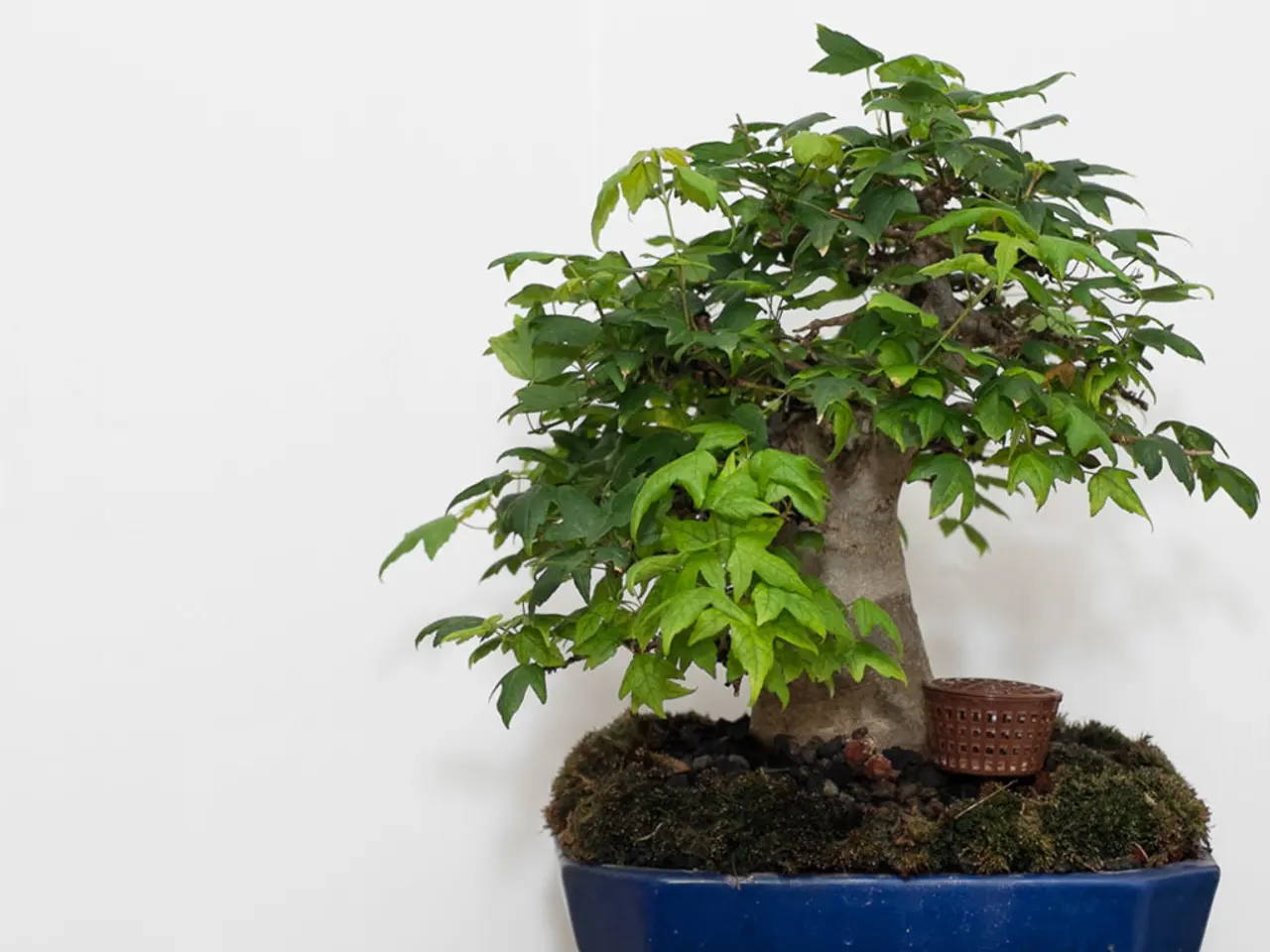
Nurturing Informal Upright Bonsai (Moyogi): Achieving Authentic Elegance and Balance in Tree Sculpting
In the world of bonsai, the Moyogi style stands out for its emphasis on natural growth patterns and unique bonsai tree characteristics. This style, originating from Japan, seeks to capture the essence of a tree's individuality and resonate with viewers on a deeper level.
During the stillness of winter, focus on structural pruning and wiring to refine your bonsai tree's shape and structure. Take advantage of the tree's dormant state to subtly manipulate its trunk and branches, creating movement and flow within the composition. The process of shaping through reduction begins after the ideal branch structure is envisioned.
Several wiring techniques are employed in the Moyogi style to achieve these gentle curves and twists. Wrap and bend, tapered wiring, layered wiring, and hidden wiring are just a few methods used to coax the bonsai tree into its desired form.
While most trees thrive in bright light, some species can tolerate low-light conditions, making indoor growth possible for bonsai tree in the Moyogi style. Careful selection of species and adapted care ensure healthy development and aesthetic appeal in limited light environments.
In the spring, focus on pruning and fertilizing to encourage new growth. Emphasizing unique bonsai tree characteristics is essential to creating a compelling and authentic bonsai composition. Unique trunk shapes, intriguing branch patterns, leaf shape and color, and natural imperfections should be highlighted to emphasize the tree's distinctive features.
During summer, attention shifts to pest management and hydration. By synchronizing your bonsai tree care with the rhythms of nature, you will cultivate a thriving, resilient tree that embodies the essence of the Moyogi style.
Employ seasonal foliage and decorative elements to create a dynamic, ever-changing visual experience that celebrates the beauty of nature. Advanced styling and refining techniques, such as subtle branch manipulation, foliage layering, trunk refinement, and seasonal accentuation, can be employed to further refine and elevate the aesthetic appeal of your bonsai tree in the Informal Upright Bonsai style.
While a straight trunk can be a challenge, it's not impossible to create a Moyogi bonsai tree. With careful pruning and wiring, you can coax gentle curves and movement from a straight trunk, embracing its unique character and natural beauty.
Moyogi style bonsai tree can tolerate low-light conditions with careful species selection and adapted care. This versatile style can be applied to a broader range of tree species, including deciduous and flowering varieties, to create unique and enthralling informal upright bonsai tree.
Remember, it is essential to attune yourself to the natural cycles of growth and dormancy, tailoring your bonsai tree care to meet the specific needs of your tree during each season. Strategic bonsai pruning eliminates unnecessary branches to improve the overall aesthetic and redirect energy. Seasonal care and maintenance are crucial for the long-term health and vigor of the bonsai tree.
As autumn arrives, reduce watering and fertilization, allowing the tree to prepare for dormancy. Frequent pruning harmonizes your bonsai tree's growth, directing energy towards desired shapes and sizes, rather than stunting it, when done judiciously and with precision, respecting the tree's natural rhythm.
By skillfully manipulating the trunk and branches, artists can create movement and flow within the Moyogi composition, capturing the dynamic energy and visual interest that defines this style. By following these guidelines and nurturing your bonsai tree with care and patience, you will cultivate a thriving, resilient tree that embodies the essence of the Moyogi style.
Read also:
- Financial report from Mohegan reveals plans for restructuring debt on their INSPIRE resort project through refinancing.
- Technology exhibit CES reveals Crystal microLED display from Swarovski Mobility division
- Beachgoers should be aware that potentially lethal "flesh-consuming bacteria" can survive in coastal environments. Here are safety precautions to follow.
- Elimination of Permitted Development Rights Advocated Across Industries



%3A%20Achieving%20Authentic%20Elegance%20and%20Balance%20in%20Tree%20Sculpting)